


When Anisa Nandaula’s mother asked her whether she’d ever heard of a “place called Australia” when she was a child, the comedian recalls saying a firm “no”.
The comedian grew up in a single-parent household in Uganda and migrated to Australia with her mum and siblings when she was just seven years old.
The move was a “shock” to the system, Anisa recalled in an interview with the SBS podcast My First Year In Australia.
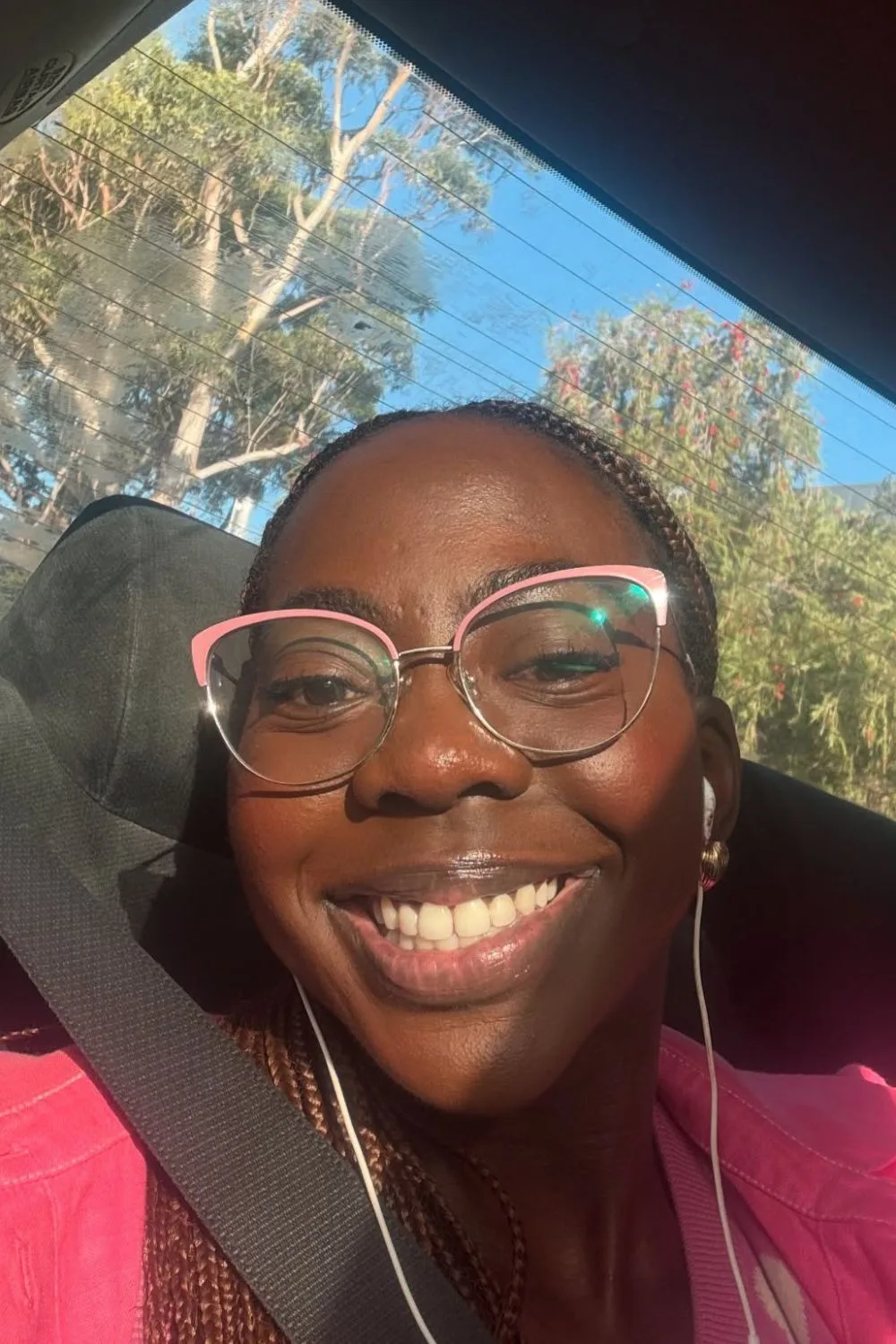
Why did Anisa Nandaula move to Australia?
Back in Uganda, Anisa lived a very family-oriented life, where she’d regularly connect with her extended family around big plates of food.
“I think my mum looked around and saw that there was no future for us there, or the future that she wanted for us didn’t exist there, so she just had a dream,” Anisa told SBS.
When Anisa’s mum fell in love with an Australian man, she took the children to visit, and the family finally migrated to Rockhampton, Queensland.
While Anisa was “overjoyed” to be in Australia, it was a transition that she describes as “very, very, very difficult”.
“As a little kid, I had to start wrapping my head around the concept of race,” Anisa told SBS. “I had no idea what race was. I didn’t know what racism was. All I knew was that a lot of the kids didn’t want to talk to me or sit with me, and I had no idea why.”
“I started piecing the idea of race together, and it was really hard…”
The family later moved to Brisbane, where Anisa attended high school, where she connected with others she could “relate to”.
Anisa would go on to go to university to study law.
She found new confidence in being able to voice her opinions, and she also became a poet, until expressing herself that way didn’t feel right anymore.
“I got tired of making people sad or making people ponder,” the comedian told the ABC. “I just want to make them laugh.”
The start of the COVID-19 pandemic was a turning point for the star. Anisa decided to give a stand-up gig a go.
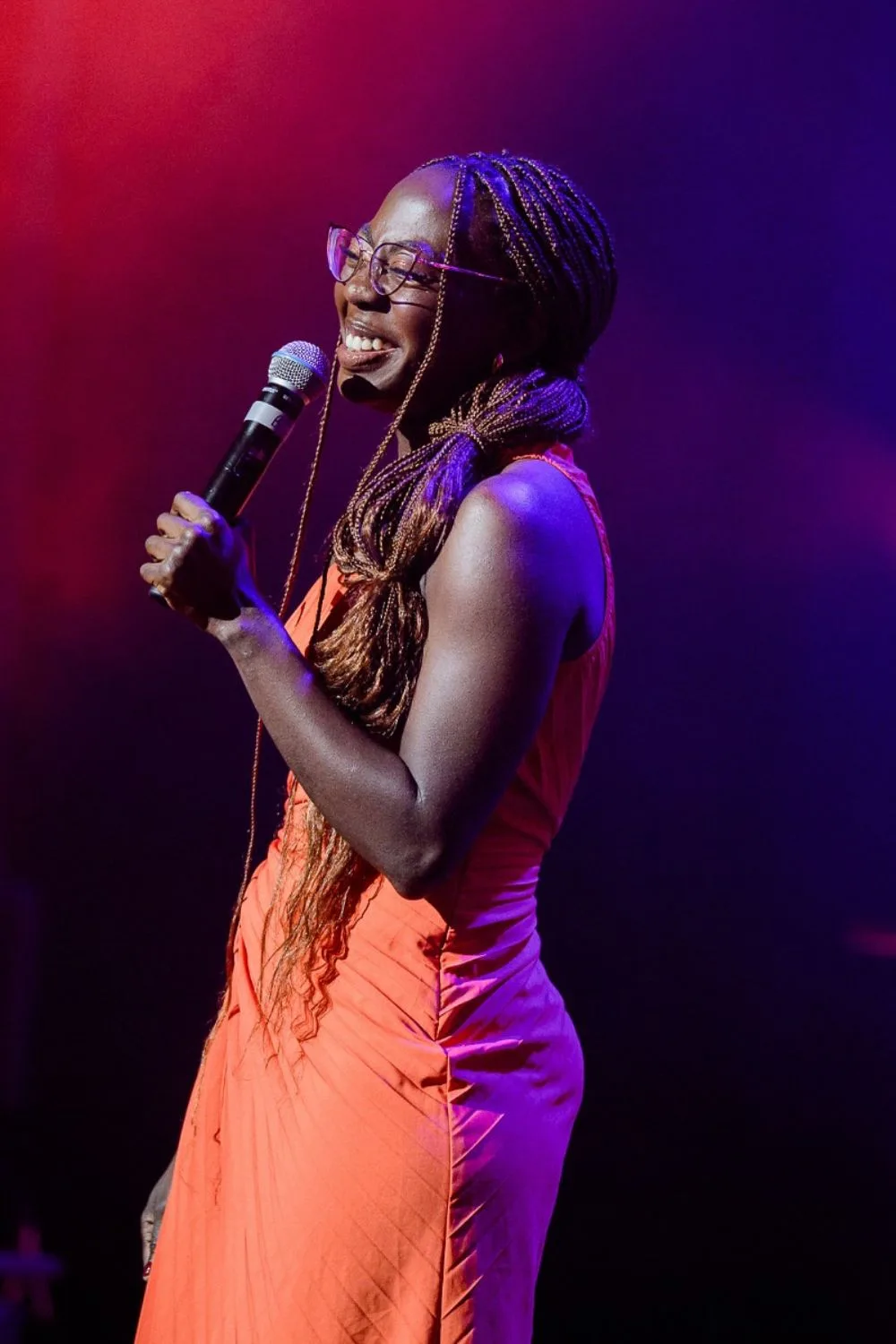
“I started out as a slam poet, and when Covid hit, I decided to try stand-up comedy because my friend had just been harassing me to do it,” she said in an interview with Missing Perspectives. “And when I stepped on stage for the first time, I immediately fell in love.
“I’ve never been certain about anything in my life. I’m an incredibly indecisive person. However, the minute I got off stage, I knew that this is what I was gonna do for the rest of my life, and no one could change my mind.”
Anisa spent years doing gigs in Brisbane – often doing two or three gigs a night – and yet she realised she was “getting nowhere”.
“All the conventional points that you’re meant to take as a stand-up — do RAW, and then you do Comedy Zone — these are all the things that you’re meant to do to get success. And I just wasn’t getting any,” the star divulged to ABC.
So she started getting creative, uploading clips of her performing to TikTok, where she quickly found a following.
“I started getting recognised by people in real life for my TikTok. I think I only had like 5,000 followers at the time,” she explained. “But just the fact that my comedy was resonating with people, I was like, ‘I could make something of this.'”
5,000 followers turned into 300,000 followers, and social media success led to a TV appearance on Channel 10’s Thank God You’re Here.
“Everything that I share on social media is derived from my personal experience,” the star told Missing Perspectives. “I think that the only things that go viral are things that are real and that touch people’s humanity. I just talk about my life and I put it online.”
It’s been a winning formula.
Anisa is now set to feature in Season five of Taskmaster, airing later in 2025. She was also announced as the Gen Z team captain on the rebooted series Talkin’ ‘Bout Your Gen, hosted by Anne Edmonds, and she’s been able to ditch her day job in the legal sector to pursue comedy full-time.

“The best way to describe it is, you know, when your partner comes home and they say there was cake at work, and they brought some for you because it was left over,” Anisa told ABC. “It’s like that feeling.”
And the comedian believes humour can be used to build bridges too.
“I feel like humour is a tool to talk about race and other social issues because it’s incredibly disarming,” she told Missing Perspectives.
“The essence of humour is that the other person must understand what you’re saying in order to generate a laugh.
“Comedy is essentially just understanding and building bridges between my universe and yours, so I think that to have a discussion around race and identity, comedy is the perfect way to do it.”

